

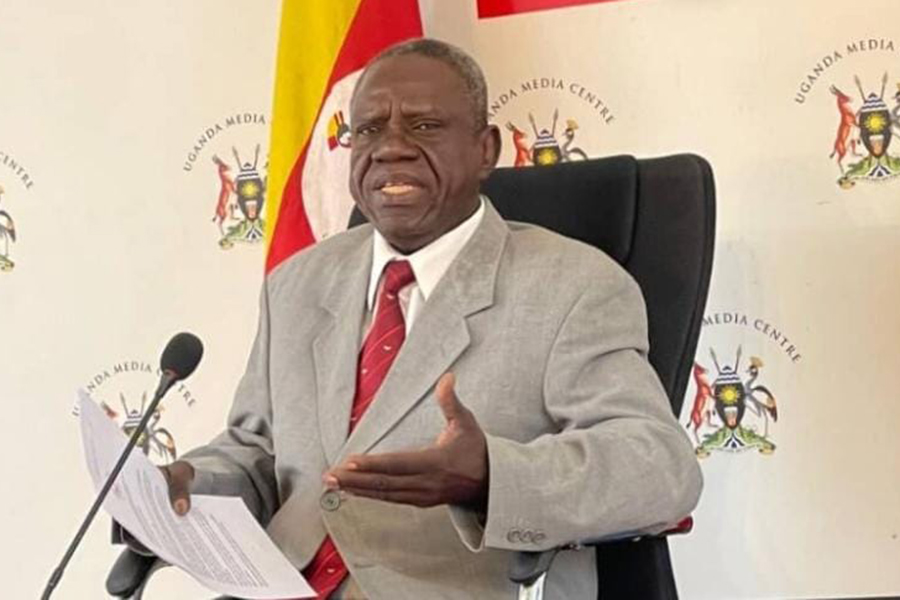
Since 1986, more than 28,340 Ugandans who once participated in armed rebellion have been granted amnesty, the Uganda Amnesty Commission has revealed, underscoring the programme’s role in promoting peace, reconciliation, and national stability.
The figures were disclosed by the Commission’s Chairperson, Justice P.K.K. Onega, while presenting a progress report at the Uganda Media Centre on Wednesday.
Justice Onega explained that the beneficiaries include those who directly fought in conflicts, collaborated with rebel groups, or supported insurgent activities.
The amnesty framework allows former combatants to renounce rebellion, disarm, and reintegrate into civilian life through structured demobilization programmes.
“The amnesty programme offers a path for those involved in rebellion to abandon armed conflict and become productive members of society,” he said.
The largest group of beneficiaries came from the Lord’s Resistance Army with 13,605 former fighters, followed by the West Nile Bank Front (6,580), and the Uganda National Rescue Front II (3,250).
The Allied Democratic Forces contributed 2,764 returnees, with 2,140 more from 26 smaller defunct rebel groups.
Justice Onega emphasized that the Commission’s work extends beyond issuing amnesty certificates. It includes resettlement, psychosocial support, community dialogue, reconciliation, and public awareness initiatives to strengthen social cohesion.
“Our focus is not only on forgiveness but also on reintegration, healing, and building lasting peace within communities,” he said.
Officials note that the amnesty programme has been critical in encouraging defections from armed groups, reducing insurgency, and fostering national unity across affected regions, allowing former combatants to transition into lawful and productive livelihoods.
